What Is MCP—and Why Should My Business Care Who My AI Can Connect To?
Dear Will and AiME,
Our company is starting to use AI tools that can connect directly to our files, databases, CRM, and other business systems. Our technology team keeps mentioning something called “MCP.” Is this just another AI acronym, or is there something the business side should be thinking about?
— Innovation Officer, Minneapolis
Short Answer 💡
MCP (Model Context Protocol) is a standard that allows AI tools to connect directly to your business systems, files, and data. This makes AI far more capable and creates a strategic opportunity for businesses that govern access, confidentiality, and intellectual property thoughtfully.
Dear Innovation Officer,
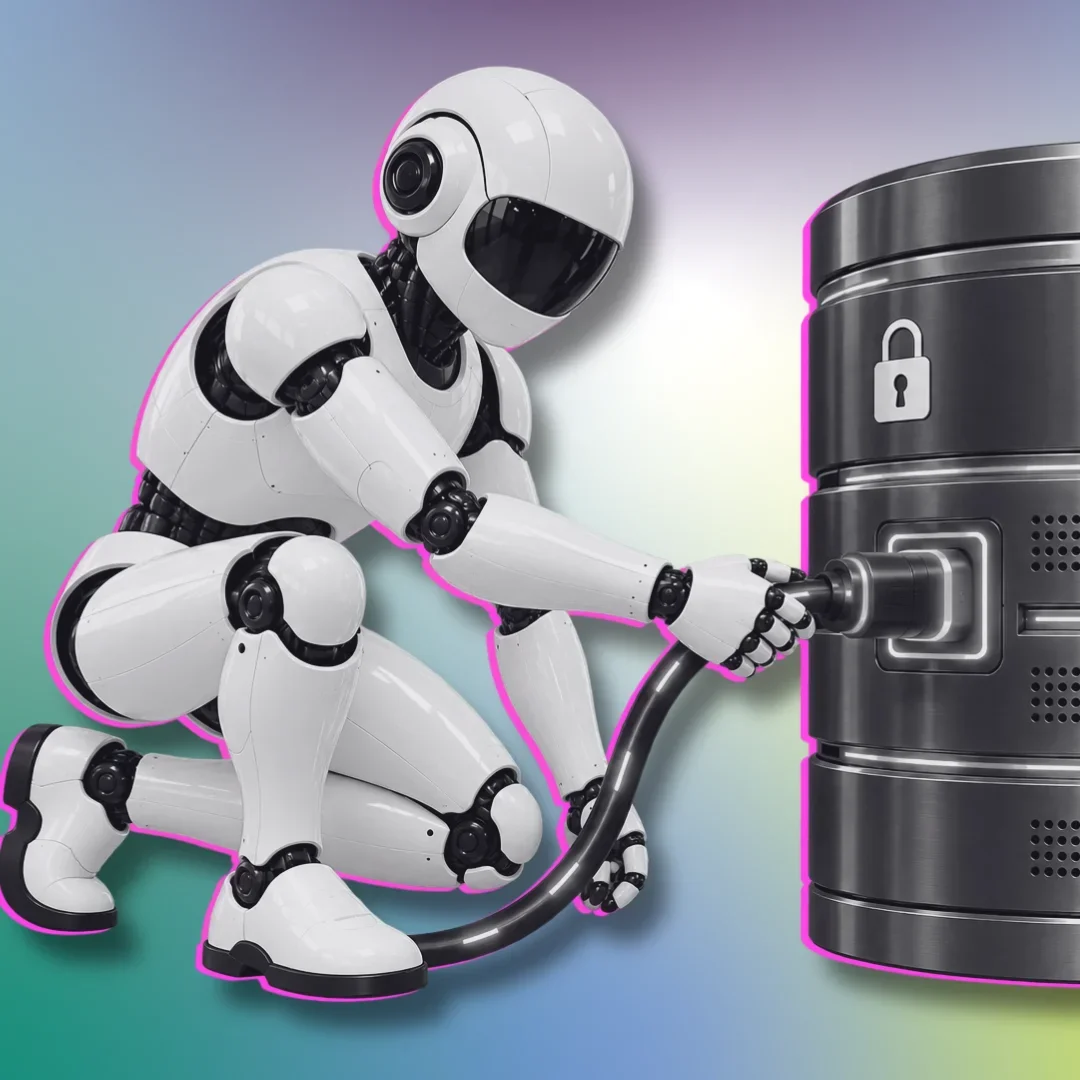
Think of it as a common language that helps an AI assistant move beyond answering questions and start interacting with the systems your business actually uses.
This capability is enormously useful. It also expands what businesses should consider when deploying AI.
How MCP Transforms AI From Chatbot to Connected System
Most businesses started their generative AI journey with a fairly simple model: an employee types something into an AI tool and gets an answer back.
MCP helps make that relationship much more powerful.
An AI assistant could potentially connect to a document repository to retrieve a contract, query a customer database, access a project-management system, call an external service, or use another business tool to complete a task.
Instead of asking, “What does the AI know?” businesses can now ask, “What can the AI reach, and what can it do when it gets there?”
What Can Your AI Access, and How Should You Manage It?
Beyond what employees enter into AI prompts, connected AI introduces another consideration: What information can the AI retrieve on its own?
When an AI system has broad access to internal files, customer information, source code, marketing plans, contracts, or other sensitive information, thoughtful configuration ensures the right information reaches the right tools.
Cybersecurity authorities recognize this opportunity. The NSA recently issued security guidance addressing MCP and AI-driven automation, covering authorization, trust relationships, context sharing, and how AI agents invoke tools dynamically.
Connecting an AI system to a business resource is an access-control decision, and treating it that way positions your business to capture value while maintaining appropriate safeguards.
How MCP Connections Can Affect Trade Secrets and IP Protection
For many businesses, some of the most valuable information accessible through these systems may also be intellectual property.
Consider an AI assistant connected to product-development files, unreleased marketing materials, software repositories, licensing agreements, customer lists, or internal research. Those systems may contain copyrighted works, trade secrets, confidential information, licensed content, or information subject to contractual restrictions.
Businesses benefit from considering both whether the AI may access that information and what happens after access occurs.
Does information leave the company's environment? Is it retained? Can it be used to improve a third-party service? Can another connected tool receive it? Are logs created? Who can access those logs?
These questions help ensure alignment with confidentiality obligations, vendor agreements, privacy requirements, licenses, and trade-secret protection.
How Should Businesses Govern AI Access?
A practical approach is to think about an MCP connection much like giving someone keys to part of your business.
Not everyone needs the master key.
Businesses deploying connected AI should consider limiting access to what is actually necessary, separating low-risk and sensitive systems, reviewing third-party MCP servers and connectors, maintaining logs, and requiring additional approval before an AI system takes higher-risk actions.
It is also worth identifying who owns this process internally. IT may configure the connection, while Legal, Security, Privacy, and the business unit each bring valuable perspective.
The Business Case for MCP Governance
MCP may sound technical, but its business significance is straightforward: AI is becoming connected, and that creates opportunity.
The next phase of enterprise AI will be about what the model can see, where it can go, and what it is authorized to do once it gets there.
Businesses that understand which doors they are opening, and decide thoughtfully how many keys their AI needs, will be positioned to lead.
— Will & AiME
Three Takeaways:
MCP can allow AI applications to connect directly with business data, tools, and systems.
Treat AI connections as access-control decisions, particularly when confidential information, personal data, or intellectual property is involved.
A practical MCP strategy combines least-privilege access, vendor diligence, logging, contractual review, and clear internal responsibility.